
Produced Water
treatmentTrevi uses forward osmosis and thermal draw recovery to separate water from pretreated, high-salinity produced water: a recoverable water stream out, a smaller residual to manage.
The Produced Water Treatment Process
Produced water changes from field to field: oil, suspended solids, scale-forming ions, dissolved salts, gases, and treatment chemicals all shape the process. Trevi starts with the assay and the required endpoint.
The design connects site pretreatment, Trevi's concentration stage, product-water polishing, and a defined route for the remaining brine.
- Site pretreatment
- Remove free oil and suspended solids to the defined inlet condition
- Trevi FO / PFO
- Move water across the membrane; most dissolved salts stay in the concentrate
- Recovered water
- Polish to the quality the selected use or next step requires
- Concentrated residual
- Route a smaller brine stream to disposal, evaporation, crystallization, or recovery; Trevi's Direct Draw Extraction (DDX) is one final recovery step
Pretreatment, polishing, and residual handling are designed around the feed and the required outcome.
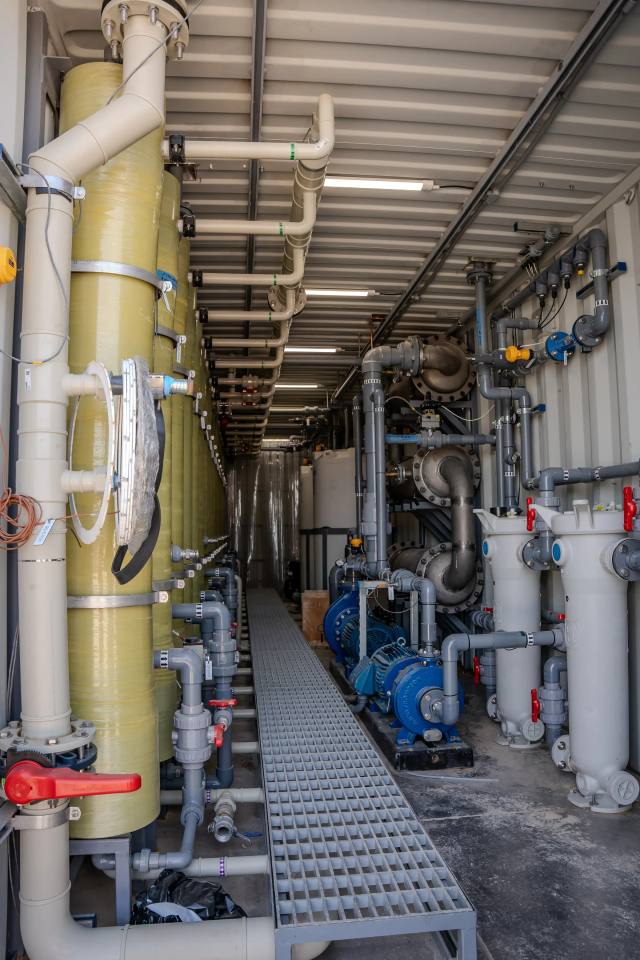
Evaluating a Produced Water Project
Trevi fits best when dissolved-salt concentration is the limiting step, residual volume is expensive, and a practical heat source exists. Four questions start the project.
- 01
What is in the water?
Provide a representative analysis, variability range, temperature, flow profile, and the treatment already in place.
- 02
What must the water become?
Define the required quality for reuse, reinjection, discharge, or further treatment.
- 03
What energy is available?
Map accessible waste heat, solar thermal, geothermal heat, and electricity across operating seasons.
- 04
Where will the residual go?
Set the brine-volume-reduction target and the downstream disposal, evaporation, crystallization, or recovery route.
How the Treatment Process Works
The technology matters. The operating envelope matters more.
- 01
Define the water
We characterize oil and grease, dissolved gases, and total and dissolved metals alongside the core panel. Chemistry varies by formation and shifts between wells.
- 02
Prepare the feed
Set pretreatment and operating controls for the actual stream. The inlet specification is a project output, not an assumption.
- 03
Concentrate the feed
FO or PFO transfers water into Trevi's draw solution while salts and other rejected constituents remain in the feed-side concentrate.
- 04
Regenerate the draw solution
Thermal recovery separates water from the draw solution. The draw returns to the loop; the water and residual go to their destinations.
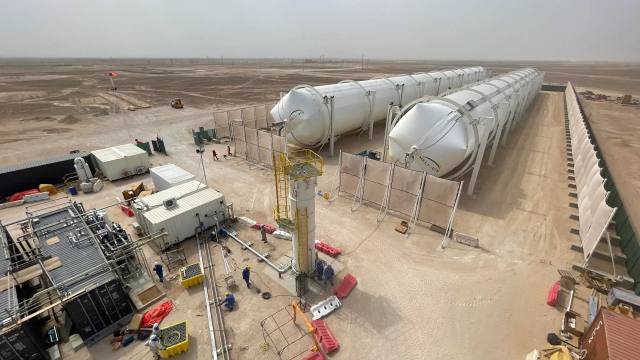
Field Evidence: Qarat al Milh, Oman
At Qarat al Milh, ARA Petroleum E&P, HELIOVIS, and Trevi integrated a solar-thermal field, thermal storage, and Trevi forward osmosis into a produced-water pilot, announcing mechanical completion and commissioning in 2024.
The system is designed to produce up to 1,000 bbl of fresh water per day and further concentrate the hypersaline feed by 50%. A solar field at approximately 180°C supplies heat through hot-water storage for continuous operation.
- Evidence level
- Pilot · Mechanical completion and commissioning announced
- Feed
- Hypersaline oilfield produced water at 105,000 mg/L
- Design target
- Up to 1,000 bbl/day of fresh water
- Design statement
- 50% further brine concentration
- Thermal integration
- Solar thermal + heat storage
Results are feed-specific.
Review Your FeedStart with the water you actually have. We'll map the next step.