Corrosion-Resistant Low-Grade Heat Transfer

Polymeric Heat

exchangers

ThermoSnare™ is Trevi's field-tested polymeric tube-in-shell heat exchanger for low-level heat recovery, built for the acidic streams of industry and mining. One fluid runs through thin polymer tubes, one through the shell; capacity grows modularly.

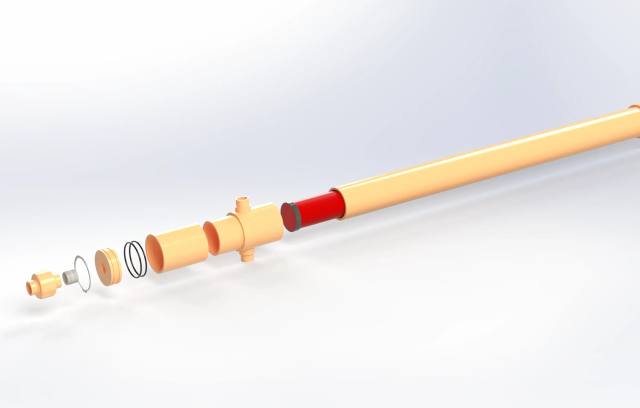
Exploded view of a Trevi ThermoSnare polymeric tube-in-shell heat-exchanger element
Exploded ThermoSnare™ tube-in-shell element: end fitting, seals, shell, inner polymer tube.
Tube side + shell side

Two Fluid Paths, One Thermal Interface

Polymer conducts less heat than metal. The design compensates: ultra-thin walls, high surface area, countercurrent geometry, controlled flow distribution.

01

Distribute

Manifolds and seals keep the two fluid paths separate.

02

Exchange

Thin polymer walls and surface area move heat between the circuits.

03

Recover

Geometry and controls manage duty, viscosity, temperature approach, and pressure drop.

Wall
Thickness · high and low pH compatibility
Bundle
Surface area · twisted or wound geometry forcing countercurrent flow
Hydraulics
Flow distribution · pressure drop · mixed hydraulic diameters
Integrity
Manifolds · seals · cleaning · fluids up to 130 °C and harsh chemistry

Pressure rating, service life, and cost are established for each project's fluids and duty.

Discuss Your Operating Envelope
Fit review

Starting From the Heat Balance

A review starts with measured conditions and ends with a test plan.

  1. 01

    Characterize the source

    Record fluid, temperatures, flow, pressure, chemistry, fouling potential, and duty cycle.

  2. 02

    Define the sink

    Set the receiving fluid, target temperature, schedule, and required duty.

  3. 03

    Engineer the boundary

    Size the wall, bundle, manifolds, seals, and controls.

  4. 04

    Validate the cases

    Check startup, turndown, upset, shutdown, and seasonal conditions.

Two programs · Separate boundaries

Field Testing and FO Integration

CEC field program

Brewery and winery heat recovery

Under CEC grant CEC-500-2025-001, Trevi built and installed baseline and carbon-doped P-HEX units to compare material thermal conductivity.

MeasuredEffectiveness progression
40% → 60% → 80%
California Energy Commission
AttributedCapacity progression
30 → 100 → 200 kW-thermal
Trevi Systems
MeasuredMeasured U-factor
342 W/m²·°C
California Energy Commission
PublishedReported stability
More than nine months of operation at two industrial customers
CEC final report

Results are specific to the CEC program's fluids, sites, and scale.

DOE / NELHA prototype

Polymeric exchanger considered for FO integration

DE-EE0008403 documents a full-scale inline twisted-tube prototype using 0.15 mm-wall polypropylene tubing for a 500 m³/day plant design.

PublishedProgram decision
Commercial exchangers were procured during the pandemic to expedite construction
DOE / NELHA final report

A separate prototype program; figures are not combined with the CEC results.

Review the Program Basis
P-HEX fit review

Bring the temperatures, flows, fluids, and duty cycle. Trevi will scope the next engineering question.